
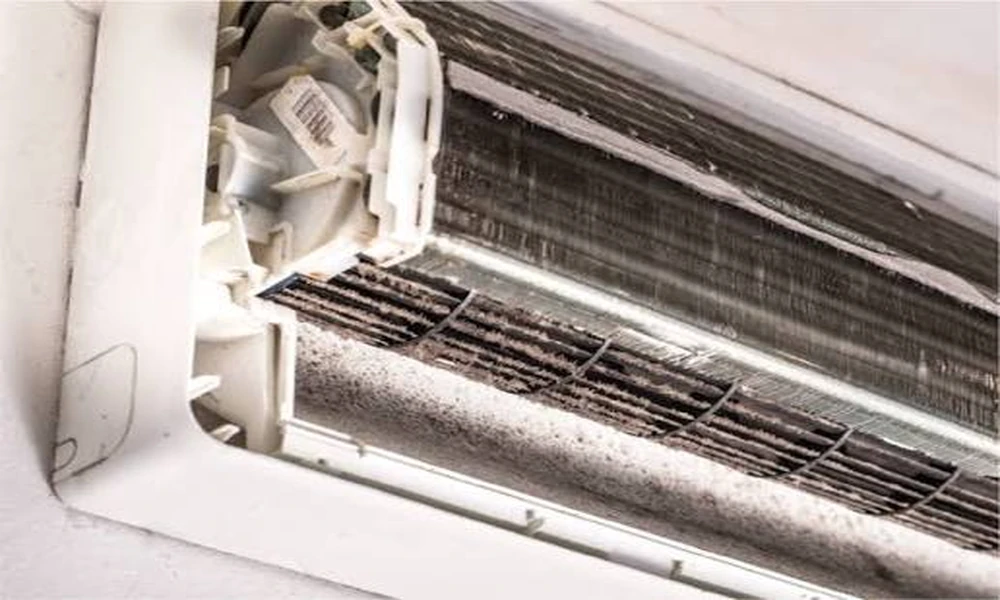
You changed the filter. The air still smells like a basement, your sinuses still act up in February, and the dust on the coffee table reappears by Thursday. I’ve watched neighbors repeat that cycle for three winters straight, and I get why. A filter is the cheapest, easiest thing to buy, so it feels like progress. It’s usually the wrong lever.
The real problem is that a filter only catches what happens to drift past it, and only if the whole system gets sized and maintained around filtration rather than airflow alone. Fixing Dayton air quality is a system question, not a hardware question, and that distinction changes what you should spend money on first.
I’d start with an honest assessment of the whole house, which is where Indoor air quality services in Dayton, Ohio by A1 Mechanical Heating & Cooling comes in. That means someone walking your ducts, checking return paths, and telling you whether filtration will help or just make your blower work harder. Before you call anyone, though, here’s what’s actually going on in your house.
Your filter is a screen, not a scrubber
A standard 1-inch fiberglass filter exists to protect the blower motor from debris. That’s it. It isn’t designed to clean the air you breathe, and a higher MERV rating on a thin filter can choke airflow, which raises energy use and can freeze a coil in summer. The Environmental Protection Agency treats indoor air as a distinct pollution problem, separate from outdoor air, and notes that source control beats filtration every time. Translation: stop the dust, moisture, and fumes from entering before you try to trap them.
The filter you want depends on filter depth and blower capacity, and most Dayton homes have a filter slot sized for cheap hardware, not a media cabinet. If you’re buying a 20x25x1 every six weeks, you’re solving a problem you don’t have while ignoring the ones you do.
What Dayton’s climate does to indoor air
This region swings hard. Humid Augusts push moisture into crawl spaces and basements, and dry January air pulls it right back out while your furnace runs flat out. That whipsaw matters more than most people realize. Too much moisture feeds mold and dust mites. Too little dries out wood floors and makes static cling to everything you own. Neither one shows up on a filter, and neither one gets fixed by swapping MERV ratings.
Carbon monoxide is the other quiet factor. Anything that burns fuel, from your furnace to a gas range, needs proper venting, and the National Oceanic and Atmospheric Administration tracks how weather patterns keep pollutants trapped close to the ground on still days. If you can’t remember the last time your combustion appliances were checked, that’s a bigger deal than a dusty shelf.
The three things I’d actually fix, in order
Seal and ventilate first. Air sealing around rim joists, attic hatches, and exterior penetrations stops the outdoor stuff from coming in. Then add controlled ventilation so a tight house doesn’t just recycle stale air. This one step does more for perceived air quality than any add-on device I’ve ever seen.
Get moisture under control. Crawl space encapsulation, a properly sized dehumidifier, and bathroom exhaust that actually vents outside rather than into the attic. I’d choose a dehumidifier over an air purifier ten times out of ten in a Dayton basement, and I’ll defend that pick to anyone.
Then upgrade filtration properly. A 4-inch or 5-inch media cabinet with a MERV 11 to 13 filter gives you real particle capture without strangling airflow, and you change it once or twice a year instead of every month. That’s the version that works. The 1-inch premium filter is the version that sells.
A quick walkthrough checklist
Run this before you spend a dime, and write down what you find so you’re not guessing later.
- Check the filter slot for bypass gaps. If air sneaks around the filter edges, you’re filtering less than you think.
- Look for dust streaks around return grilles and flex duct joints. Streaks mean leaks.
- Test bathroom and range hood exhaust with a tissue. The tissue should stick to the grille. If it doesn’t, the fan vents poorly or not at all.
- Note any room that stays stuffy while the rest of the house feels fine. That’s a duct balance problem, not a filter problem.
- Smell the crawl space access. Musty equals moisture, and moisture comes before mold.
Photograph each finding. A technician can work twice as fast with your notes, and you’ll spot the upsell if someone recommends a purifier for a problem that’s really a return duct leak.
Standards exist for a reason
Air cleaning devices get rated against established test methods, and the National Institute of Standards and Technology has long participated in developing how those ratings are measured. That matters when a salesperson quotes a clean air delivery rate at you in your kitchen. Ask what standard the number is measured against. If nobody can tell you, the number is decoration.
Where filtering still earns its place
Don’t hear me wrong. Filtration belongs in the plan, just third, after sealing and moisture. Once your envelope is tight and your humidity is sane, real media filtration handles pollen in April, smoke haze drifting south from summer fires, and the fine dust kicked up by a house full of people and a shedding dog. Two adults, three kids, and a lab retriever produce a shocking amount of particle load, and a proper media cabinet earns its cost in that house.
If someone in the home smokes or burns candles constantly, or if you share walls with a garage, filtration and ventilation together are the answer. Separately, each one underperforms. I’ve seen homeowners buy the nicest air scrubber on the market and still feel stale air in year two, because the source never got addressed and the unit got skipped on maintenance.
What this costs you in practice
| Upgrade | What it solves | Rough priority |
|---|---|---|
| Air sealing and controlled ventilation | Outdoor pollution, stale air, backup combustion gas | First |
| Crawl space moisture control | Musty smells, mold conditions, high humidity | Second |
| Deep media filter cabinet | Pollen, smoke particles, fine dust | Third |
| Whole home purifier or UV add on | Targeted concerns once the basics work | Only if needed |
Skip the table’s last row until the first three are handled. Most homes never need it, and the ones that do already know why.
What happens if you do nothing
The filter gets changed, the smell stays, and eventually the blower motor pays the bill for restricted airflow. You also keep living with a house that feels vaguely off in a way you can’t quite name, which is the worst outcome because it’s the easiest to ignore.
Set aside one afternoon this month to run the checklist, then get a real assessment of your ducts, your envelope, and your moisture. You’ll spend less than you would on a year of premium filters, and you’ll finally understand what your house is doing. What’s the one room in your home that never feels fresh, and how long have you been blaming the filter for it?